31 real tasks, from client brief to delivery.
See what each task asks for, which rules are checked, and how the result is scored. Click a task for its details and diagram.
-
TASK 01
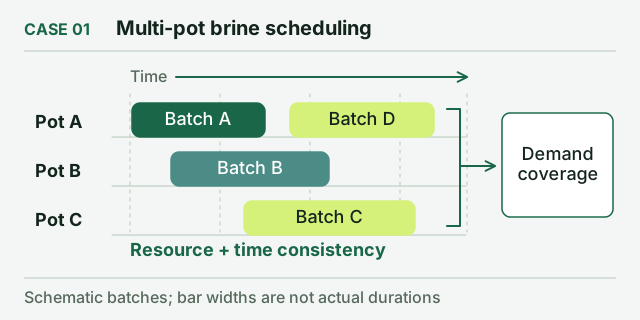
Multi-pot braising schedule
Food processing Production scheduling Design your own approachSeveral periods or stepsTie-breaking rulesMeet demand from two order batches without double-booking any pot or time slot. Plans that tie on the main goal are compared on secondary rules.
What is checked
Output formatSchedule formatNo resource or time clashesDemand is metHow it is scored
The overall score is recalculated with the project’s scheduling goal.
-
TASK 02
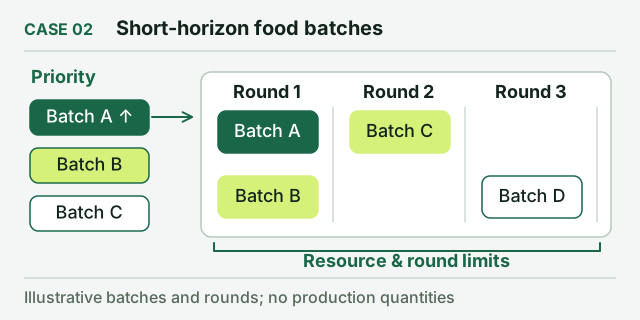
One-day food production in batches
Food processing Production scheduling Clear-cut modelSeveral periods or stepsFit several production batches into one day within the limits on resources and rounds, while weighing efficiency against order priority.
What is checked
Batch schedule formatResource limitsDemand and round limitsHow it is scored
Scored on production efficiency and priorities.
-
TASK 03
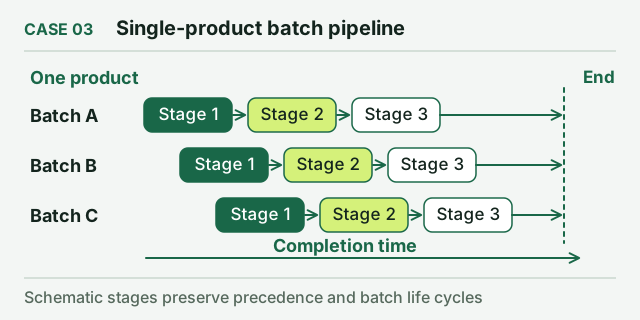
Repeated batches of one product
Food processing Production scheduling Clear-cut modelSeveral periods or stepsRun batch after batch of a single product in the right process order, replace the braising liquid when it wears out, and finish as early as possible.
What is checked
BatchesProcess orderLiquid replaced on timeDemand is metHow it is scored
Scored on completion time.
-
TASK 04
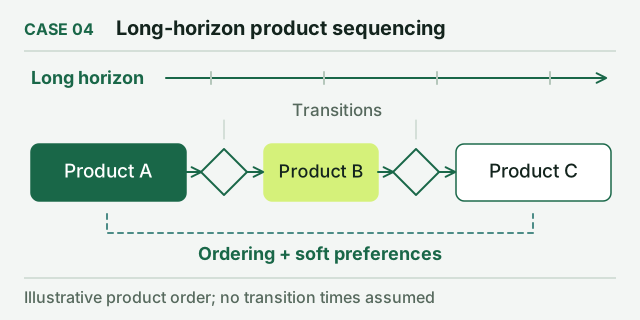
Five food products over a longer period
Food processing Production scheduling Design your own approachSeveral periods or stepsTie-breaking rulesSequence five products across the pots, where each product depends on what ran before and on the state of the liquid. Finish on time while respecting soft preferences.
What is checked
Every product scheduledChangeoversProduct orderTiming rulesHow it is scored
Scored on completion times, job order and soft preferences.
-
TASK 05
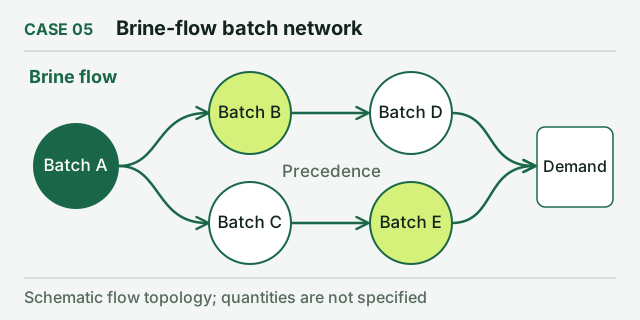
Batches linked by shared braising liquid
Food processing Production scheduling Clear-cut modelSeveral periods or stepsBraising liquid passes from one batch to the next, so the batches must run in an order that keeps that flow unbroken while meeting demand.
What is checked
Liquid flow between batchesWhat must come firstFlow never breaksDemand is metHow it is scored
Scored on production timing.
-
TASK 06
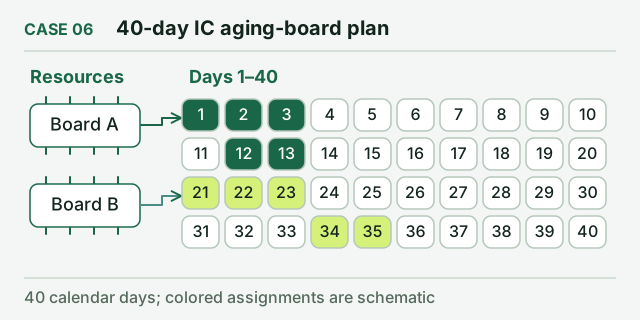
40-day chip burn-in schedule
Semiconductor testing Resource-constrained scheduling Design your own approachSeveral periods or stepsAssign chip burn-in tests to compatible boards, machines and areas over 40 days, within capacity, timing and process rules.
What is checked
Output formatResource assignmentCapacity limitsTimingProcess rulesHow it is scored
Scored on scheduling efficiency and workload pressure, as the project defines them.
-
TASK 07
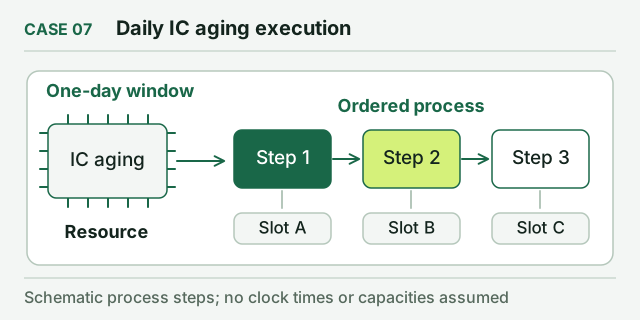
Daily chip burn-in schedule
Semiconductor testing Resource-constrained scheduling Design your own approachSeveral periods or stepsBuild a day-by-day loading plan for chip burn-in tests over 28 days, reusing boards and machines within capacity, timing and process rules.
What is checked
Output formatResource assignmentCapacity limitsTimingProcess rulesHow it is scored
Scored on scheduling efficiency and workload pressure, as the project defines them.
-
TASK 08
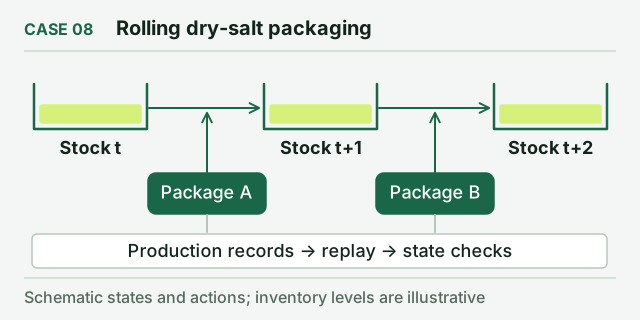
Salt drying and packaging schedule
Salt production Production scheduling Design your own approachSeveral periods or stepsPlan drying and packaging for orders with due dates, rush orders and changeovers. The plan is replayed step by step to check that resources and stock always add up.
What is checked
Production records replayed step by stepResources and stock add upEach step picks up where the last endedHow it is scored
Scored on backlog and service level.
-
TASK 09
Cutting large rolls to fill orders
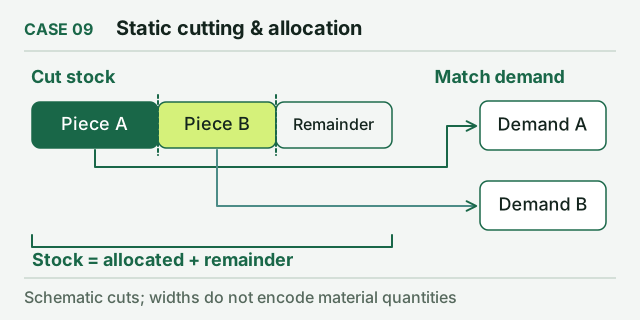
Roll converting Cutting stock Clear-cut modelDecide which parent rolls and bought-in rolls to cut, and how, so that customer orders are covered and all material is accounted for.
What is checked
Allocation formatRight material for each orderDemand is metAll material accounted forHow it is scored
Scored on material use and allocation.
-
TASK 10
Fixed-ratio coal blending
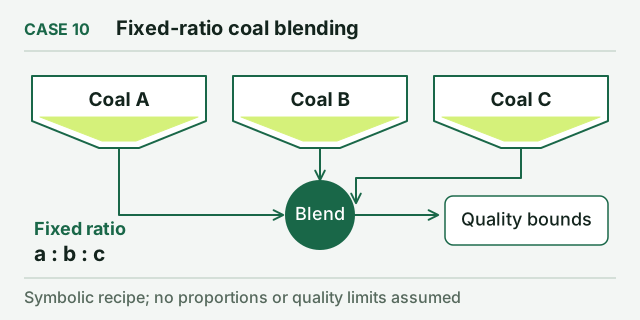
Coking Blending Clear-cut modelChoose a coal blend for coking that stays within stock, price and quality limits.
What is checked
Blend formatLimits on each materialStock on handQuality limitsHow it is scored
Scored on cost, return or quality, as the project specifies.
-
TASK 11
Copper-concentrate blending
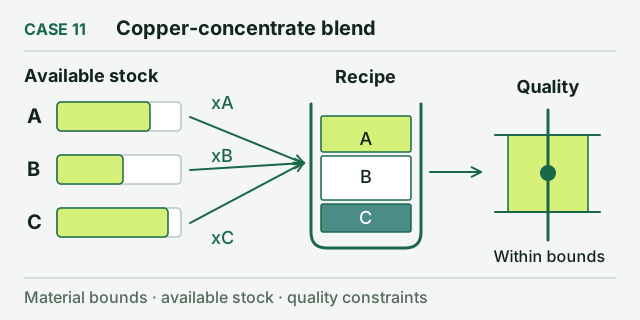
Copper smelting Blending Clear-cut modelPrepare the copper-concentrate batching list for a flash furnace, keeping the mix within composition and stock limits.
What is checked
Blend formatLimits on each materialStock on handQuality limitsHow it is scored
Scored on cost, return or quality, as the project specifies.
-
TASK 12
Grouping alloy blocks into smelting batches
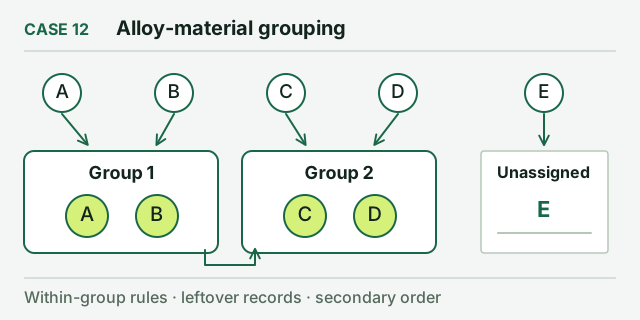
Alloy smelting Batching Clear-cut modelTie-breaking rulesDivide alloy blocks into smelting batches that meet composition limits and list any blocks left out. Plans are compared on leftovers first, then on a secondary rule.
What is checked
Grouping rulesRules within each batchLeftover blocks listedHow it is scored
Scored on leftover material first, then on a secondary ordering rule.
-
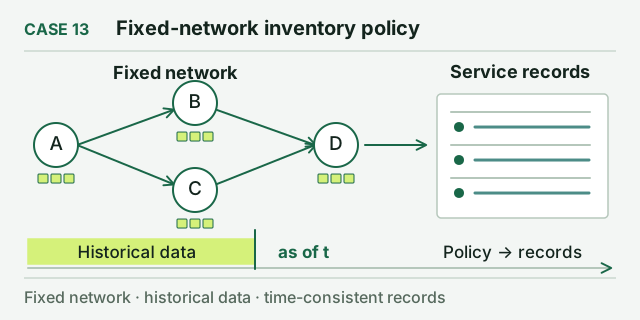
TASK 13
Inventory policy for an existing network
Supply chain Inventory optimization Design your own approachEstimate from dataSeveral periods or stepsUncertain inputsTie-breaking rulesUse past data to set finished-goods stock levels for a fixed network of factories and warehouses, using only the data available at each decision date.
What is checked
Policy in the required formAllowed parameter valuesService recordsNo use of future dataHow it is scored
Scored on historical data against several goals, as the project specifies.
-
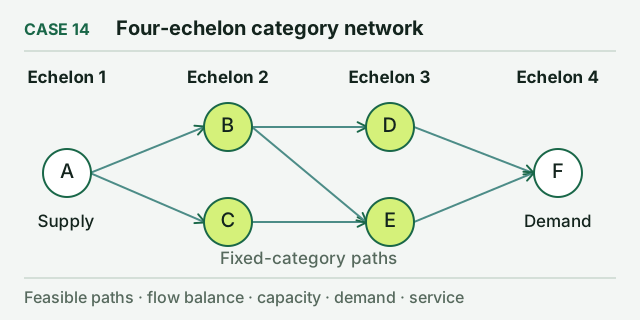
TASK 14
Four-tier supply network
Supply chain Network design Clear-cut modelDesign your own approachSeveral periods or stepsPlan how goods flow from suppliers through factories and warehouses to regional warehouses, within capacity and while meeting demand and service targets.
What is checked
Valid network linksValid routesFlows balanceCapacity limitsDemand is metService targetsHow it is scored
Cost and service are recalculated with the project’s accounting rules.
-
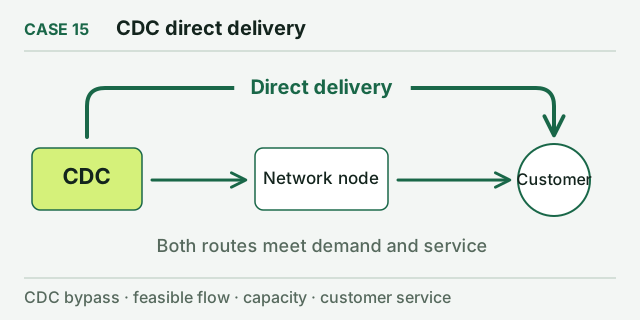
TASK 15
Supply network with direct shipping
Supply chain Network design Clear-cut modelDesign your own approachSeveral periods or stepsLike a regular supply network, except that customers can also be supplied directly. Flows must balance, stay within capacity and meet demand and service targets.
What is checked
Valid network linksValid routesFlows balanceCapacity limitsDemand is metService targetsHow it is scored
Cost and service are recalculated with the project’s accounting rules.
-
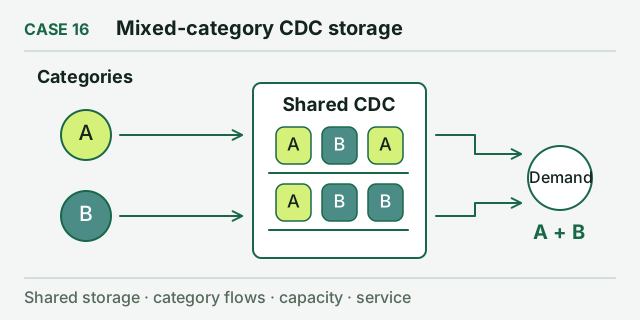
TASK 16
Supply network with shared central storage
Supply chain Network design Clear-cut modelDesign your own approachSeveral periods or stepsPlan a supply network whose central warehouses store several product categories together, within capacity and while meeting demand and service targets.
What is checked
Valid network linksValid routesFlows balanceCapacity limitsDemand is metService targetsHow it is scored
Cost and service are recalculated with the project’s accounting rules.
-
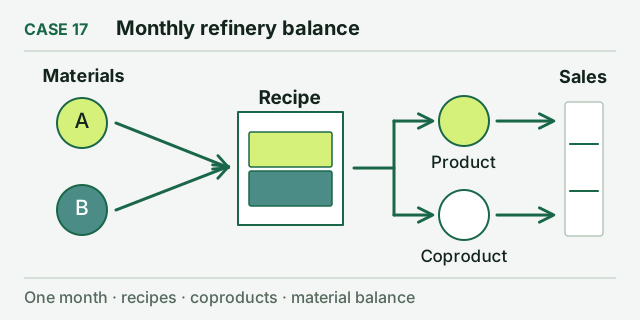
TASK 17
One month of refinery production and sales
Petroleum refining Production planning Clear-cut modelPlan a month of refinery processing and sales for the highest gross profit. Every input must be accounted for, and products made together must come out in the right proportions.
What is checked
Allowed valuesAll material accounted forProcessing recipesJoint-product proportionsHow it is scored
Revenue and cost are recalculated with the project’s accounting rules.
-
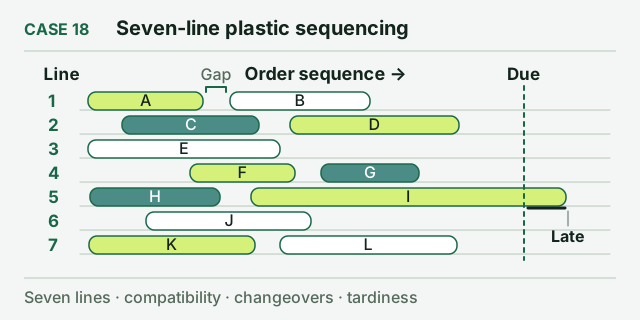
TASK 18
Order sequencing on seven plastics lines
Engineering plastics Parallel-machine scheduling Clear-cut modelSeveral periods or stepsTie-breaking rulesAssign engineering-plastics orders to seven production lines and put them in order, respecting line capacity and product compatibility, with as few late orders and changeovers as possible.
What is checked
Every order assignedLine capacityProduct compatibilityTiming rulesHow it is scored
Scored on late jobs and product changeovers.
-
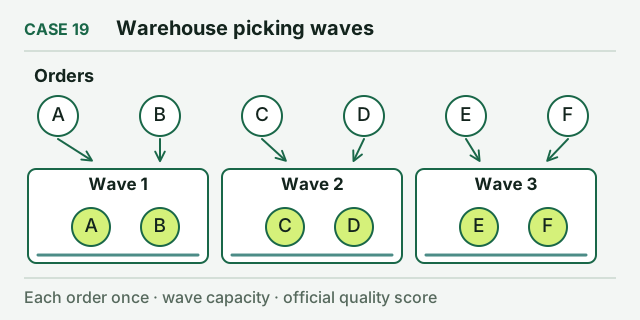
TASK 19
Picking waves for a warehouse
Warehousing Order batching Clear-cut modelDesign your own approachGroup outbound orders into picking waves so that every order is in exactly one wave and no wave is over capacity.
What is checked
Wave formatEvery order coveredNo order counted twiceCapacity limitsHow it is scored
Scored on the quality of the picking waves.
-
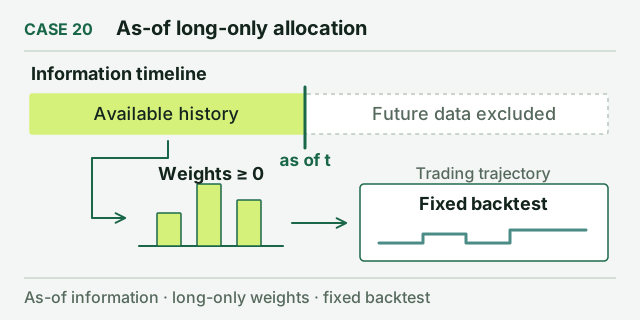
TASK 20
Long-only index-enhancement strategy
Asset management Portfolio optimization Design your own approachEstimate from dataSeveral periods or stepsWrite a stock strategy that aims to beat the CSI 2000 index using only the information available on each date. Its trades are run through a fixed backtest.
What is checked
Strategy in the required formCode runsTrading rules in the backtestHow it is scored
The resulting trades are run through a fixed backtest to recalculate performance.
-
TASK 21
Market-neutral long–short strategy
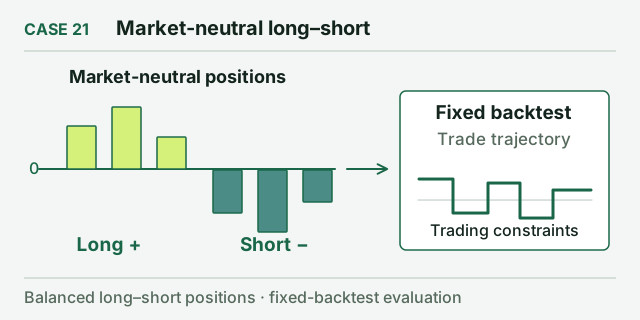
Asset management Portfolio optimization Design your own approachEstimate from dataSeveral periods or stepsWrite a strategy that buys some stocks and sells others short so that market moves cancel out, within the trading rules. Its trades are run through a fixed backtest.
What is checked
Strategy in the required formCode runsTrading rules in the backtestHow it is scored
The resulting trades are run through a fixed backtest to recalculate performance.
-
TASK 22
Stock portfolio hedged with index futures
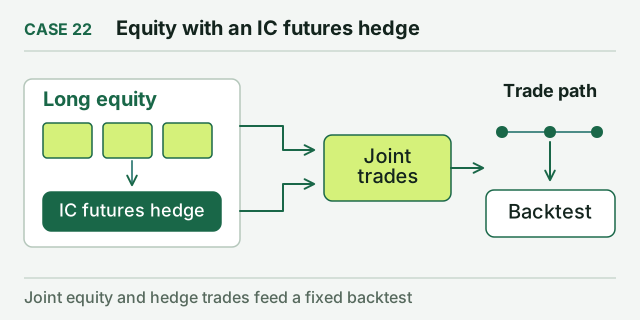
Asset management Portfolio optimization Design your own approachEstimate from dataSeveral periods or stepsWrite a strategy that holds CSI 500 stocks and hedges market risk with IC index futures. Its trades are run through a fixed backtest.
What is checked
Strategy in the required formCode runsTrading rules in the backtestHow it is scored
The resulting trades are run through a fixed backtest to recalculate performance.
-
TASK 23
Three days of grocery delivery
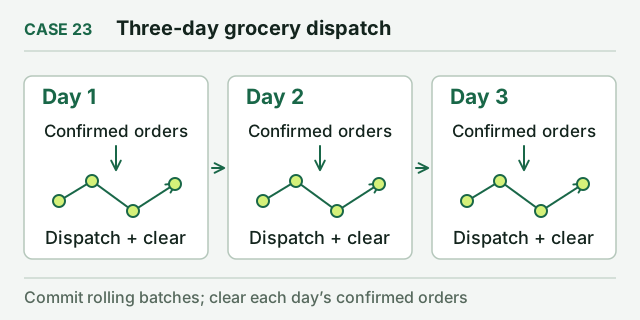
Grocery delivery Dynamic vehicle routing Design your own approachSeveral periods or stepsUncertain inputsSend out vehicles for grocery orders batch by batch as they are confirmed over three days. Dispatches cannot be undone, routes must respect vehicle capacity, and each day’s orders must all go out.
What is checked
Dispatch in batchesEvery order coveredValid routesCapacity limitsService targetsHow it is scored
Scored on delivery performance.
-
TASK 24
Hour-by-hour bike rebalancing
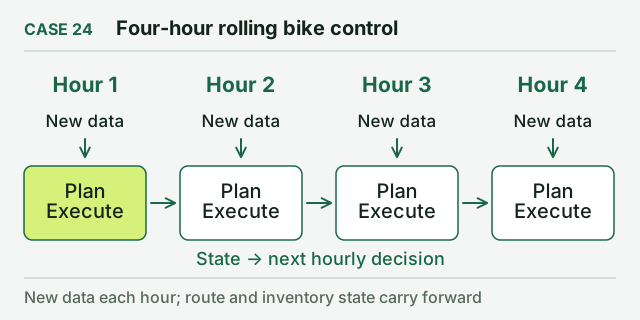
Bike sharing Inventory rebalancing Design your own approachSeveral periods or stepsTie-breaking rulesMove shared bikes between stations one hour at a time over four hours, as new trip data arrives. Each hour has to start from where the last one left off.
What is checked
Plan formatRoutes and stock add upEach step picks up where the last endedHow it is scored
The executed plan is replayed and scored on service cost.
-
TASK 25
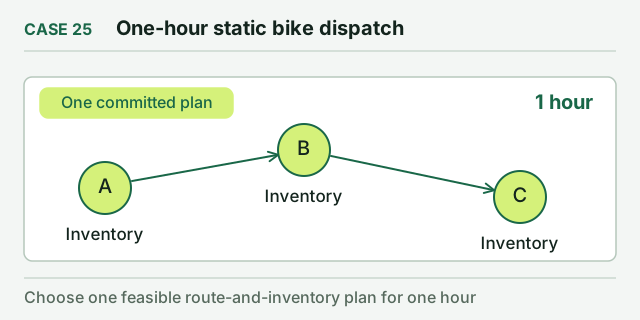
One-hour bike rebalancing
Bike sharing Inventory rebalancing Clear-cut modelPlan one hour of moving shared bikes between stations from trip and stock records, scored on the service cost once the plan is carried out.
What is checked
Plan formatRoutes and stock add upEach step picks up where the last endedHow it is scored
The executed plan is replayed and scored on service cost.
-
TASK 26
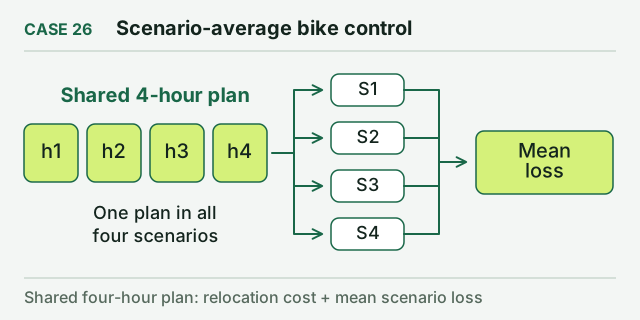
Bike rebalancing averaged over scenarios
Bike sharing Stochastic optimization Design your own approachSeveral periods or stepsUncertain inputsTie-breaking rulesIn rolling rounds, choose one four-hour plan for moving bikes that does best on average across four past scenarios, counting both moving costs and lost service.
What is checked
Format of each roundOne plan for all scenariosPhysically possibleStock carried over hour to hourHow it is scored
Scored by the project’s rules for execution and scenario risk, with supporting measures.
-
TASK 27
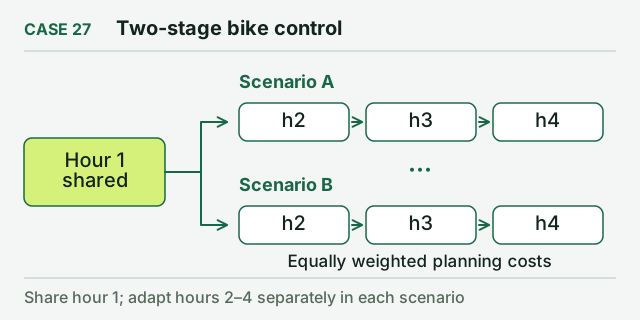
Bike rebalancing: decide now, adjust later
Bike sharing Two-stage stochastic programming Design your own approachSeveral periods or stepsUncertain inputsTie-breaking rulesCommit to the first hour of bike moves now, then adjust the next three hours separately for each scenario. All scenarios count equally.
What is checked
Format of each roundOne plan for all scenariosPhysically possibleStock carried over hour to hourHow it is scored
Scored by the project’s rules for execution and scenario risk, with supporting measures.
-
TASK 28
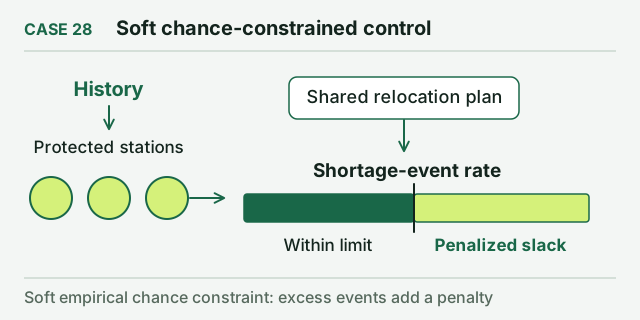
Bike rebalancing: protect key stations
Bike sharing Chance-constrained optimization Design your own approachEstimate from dataSeveral periods or stepsUncertain inputsTie-breaking rulesChoose one bike-moving plan for all scenarios, with an extra penalty when key stations, picked from past data, run out of bikes too often.
What is checked
Format of each roundOne plan for all scenariosPhysically possibleStock carried over hour to hourHow it is scored
Scored by the project’s rules for execution and scenario risk, with supporting measures.
-
TASK 29
Bike rebalancing: limit the worst losses
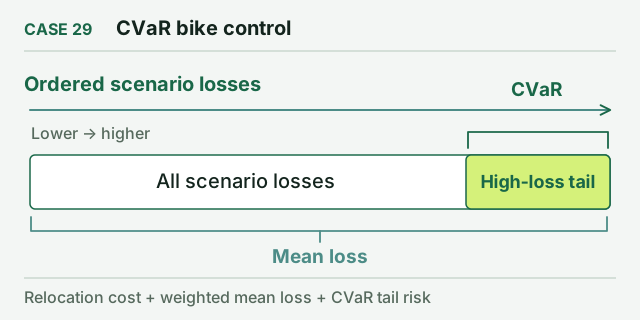
Bike sharing Risk-averse optimization Design your own approachSeveral periods or stepsUncertain inputsTie-breaking rulesChoose one bike-moving plan that balances moving costs, the average loss across scenarios and the average loss in the worst scenarios.
What is checked
Format of each roundOne plan for all scenariosPhysically possibleStock carried over hour to hourHow it is scored
Scored by the project’s rules for execution and scenario risk, with supporting measures.
-
TASK 30
Bike rebalancing when the odds are uncertain
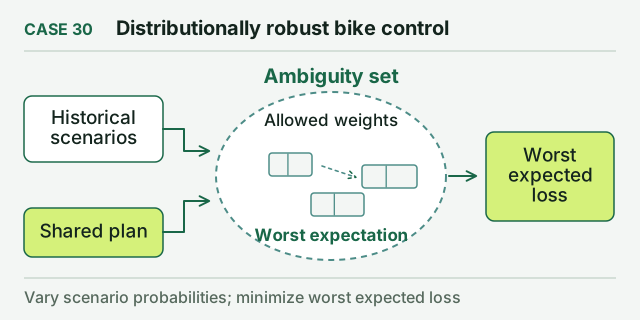
Bike sharing Distributionally robust optimization Design your own approachSeveral periods or stepsUncertain inputsTie-breaking rulesChoose one bike-moving plan that holds up even if the chance of each past scenario is not known exactly, guarding against the worst expected loss within a set range.
What is checked
Format of each roundOne plan for all scenariosPhysically possibleStock carried over hour to hourHow it is scored
Scored by the project’s rules for execution and scenario risk, with supporting measures.
-
TASK 31
Bike rebalancing: plan for 16 bad cases
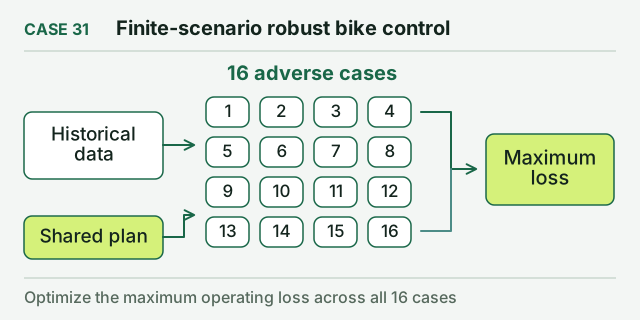
Bike sharing Robust optimization Design your own approachEstimate from dataSeveral periods or stepsUncertain inputsTie-breaking rulesBuild 16 agreed bad cases from past data, then choose one bike-moving plan that keeps the largest loss across them as small as possible.
What is checked
Format of each roundOne plan for all scenariosPhysically possibleStock carried over hour to hourHow it is scored
Scored by the project’s robust-planning rules and compared with a baseline plan.
No tasks match these filters.
Try a different search term or clear the filters.
What do the skill labels mean?
A task can carry several labels. They describe the task and play no part in scoring.